Imagine seeing an animal so huge that it makes almost every other land creature look small. With its enormous body, long trunk, and impressive tusks, the African bush elephant is truly one of nature’s most remarkable animals.
Found across different parts of Africa, this giant mammal is known as the largest land animal alive today. But its size is only one part of what makes it special. African bush elephants are highly intelligent, have strong family connections, and play an important role in keeping their natural habitats healthy.
What Is an African Bush Elephant?
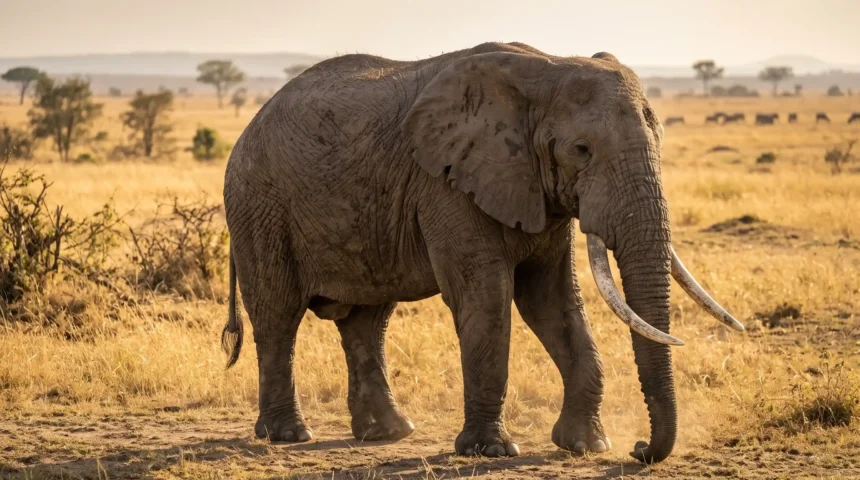
The African bush elephant (Loxodonta africana), also called the African savanna elephant, is the largest living species of elephant.
It is easily recognized by its huge ears, thick legs, long trunk, and powerful body. Adult males are usually larger than females and can reach around 3 to 4 meters in shoulder height.
These elephants live in different African environments, including open grasslands, savannas, and woodlands. They are also commonly found in areas where water and vegetation are available.
Their trunks are especially useful. An elephant can use its trunk to breathe, smell, drink water, pick up food, and even communicate with other elephants.
How Big Is an African Bush Elephant?
When it comes to size, very few land animals can compete with the African bush elephant.
A large adult male can weigh around 6,000 kilograms or even more. Its massive body is supported by four strong legs, allowing it to travel across grasslands, forests, and other challenging landscapes.
One of its most fascinating features is its trunk. It can grow more than two meters long and contains tens of thousands of muscle units, giving it incredible flexibility and strength.
Its ears are another feature that make this species stand out. They are much larger than those of Asian elephants and help release excess body heat, which is important in Africa’s warm climate.
What Does an African Bush Elephant Eat?
Despite their enormous size, African bush elephants survive entirely on plant-based food. They are herbivores and spend a large part of their day searching for vegetation.
Their diet commonly includes:
- Grass and fresh leaves
- Tree bark and branches
- Roots and other plant material
- Fruits and seasonal vegetation
Their trunks make feeding much easier. An elephant can pull leaves from trees, break off small branches, and pick up food from the ground without difficulty.
Because they eat so much vegetation, elephants also have a noticeable effect on their surroundings. While feeding, they can open up dense vegetation, spread seeds, and create changes in the landscape that benefit other wildlife.
Where Do African Bush Elephants Live?
African bush elephants are found across several parts of sub-Saharan Africa. Unlike animals that depend on just one type of environment, they can adapt to different habitats as long as food and water are available.
Their natural habitats include open savannas, grasslands, woodlands, and areas close to rivers and water sources.
Some African countries where these elephants live include:
- Botswana
- Zimbabwe
- Tanzania
- Kenya
- South Africa
- Namibia
Water plays a major role in their daily lives. During dry seasons, elephant herds may travel long distances to reach rivers, lakes, and other reliable water sources.
Their movements also help connect different habitats, making them an important part of Africa’s natural ecosystems.
Why Do African Elephants Have Such Large Ears?
One of the first things people notice about an African bush elephant is the size of its ears.
They are not simply there for hearing. These enormous ears also work as a natural cooling system.
Inside the ears are many blood vessels that help release body heat. When an elephant flaps its ears, moving air helps cool the blood flowing through them.
This is particularly useful during hot African days when temperatures can become extremely high.
So, those oversized ears serve a much bigger purpose than just making elephants look distinctive!
Are African Bush Elephants Dangerous?
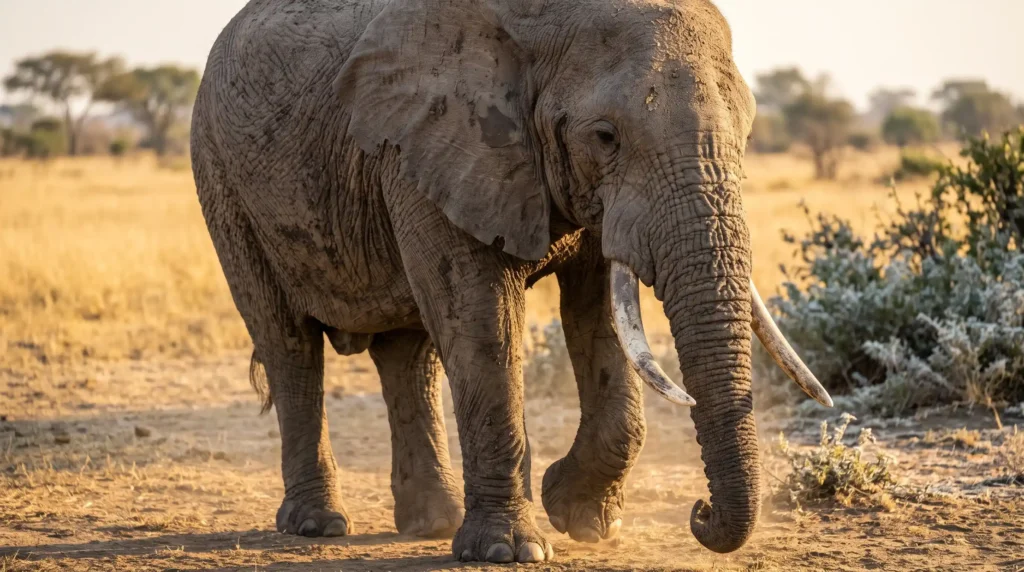
African bush elephants are often calm and peaceful when they are not disturbed. However, it is important to remember that they are powerful wild animals and should never be approached too closely.
An elephant may become defensive if it feels threatened, is protecting its young, or senses danger nearby. This is why wildlife experts always recommend observing elephants from a safe distance.
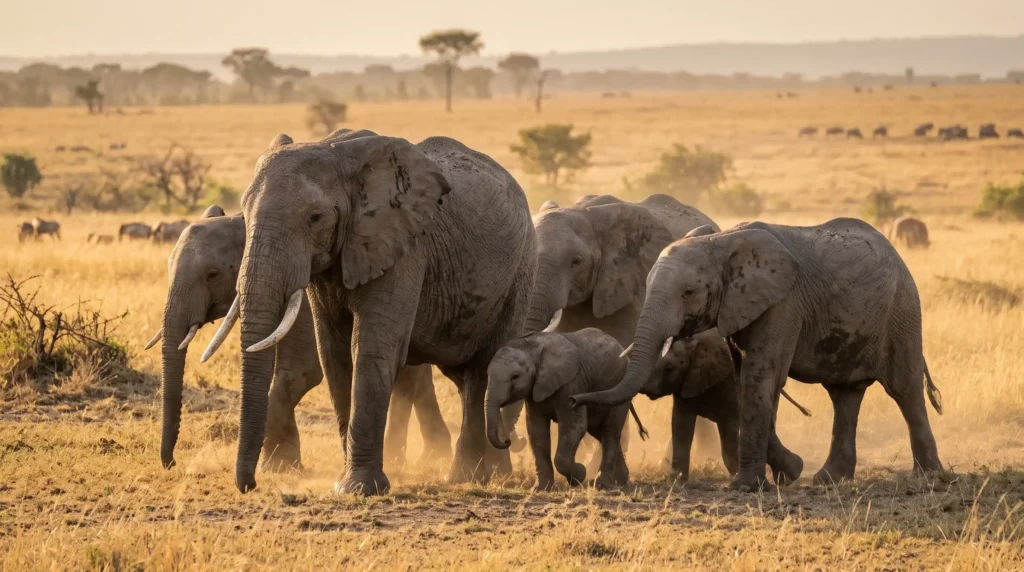
These animals also have fascinating social lives. Female elephants usually live in family groups led by an experienced female known as a matriarch.
She helps guide the herd, remembers important locations, and plays a major role in keeping the family together.
Elephants communicate through sounds, body movements, and low-frequency calls that can travel over considerable distances.
Why Are African Bush Elephants Endangered?
Despite their impressive size and strength, African bush elephants face several serious challenges in the wild.
One of the biggest threats is habitat loss. As human settlements and agricultural land expand, elephants can lose access to the areas where they traditionally find food, water, and shelter.
Illegal ivory hunting is another major problem. Elephants are targeted for their tusks, putting additional pressure on already threatened populations.
Human-elephant conflict can also increase when elephants and people compete for land and resources.
Conservation groups and wildlife authorities are working to protect these animals through habitat preservation, anti-poaching programs, and better wildlife management.
The African bush elephant is classified as Endangered on the IUCN Red List.
Protecting this species is important because elephants help maintain the balance of their natural environments. Their survival benefits many other plants and animals that share the same habitats.
Amazing Facts About African Bush Elephants
Here are some interesting facts that make these giants even more fascinating:
- They are the largest living land animals on Earth.
- Their trunks contain tens of thousands of muscle units.
- They can use their trunks for breathing, smelling, drinking, and collecting food.
- Female