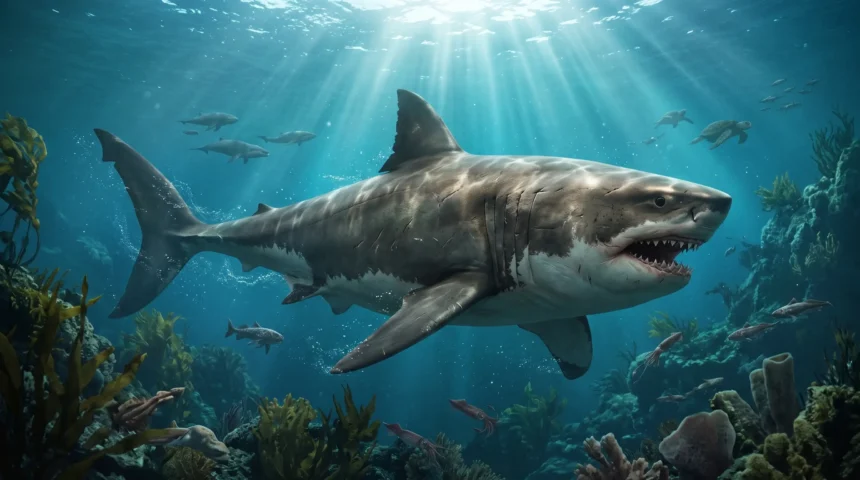
Imagine swimming through an ancient ocean where a giant shark could reach the size of a bus. Millions of years ago, such an incredible predator actually existed. Its name was Megalodon, and it was one of the largest sharks ever known to have lived on Earth.
With its enormous body, powerful jaws, and impressive teeth, Megalodon was a remarkable animal. Even though it disappeared millions of years ago, its fossils continue to fascinate scientists and people interested in prehistoric marine life.
But what made this giant shark so special? Where did it live, what did it eat, and what eventually led to its extinction? Let’s take a closer look at its fascinating history.
What Was Megalodon?
Megalodon, scientifically known as Otodus megalodon, was an extinct species of giant shark that lived approximately 23 million to 3.6 million years ago.
Although it shared some similarities with today’s great white shark, Megalodon belonged to a different ancient shark lineage. Its enormous size and powerful feeding abilities made it one of the most impressive marine predators of its time.
Interestingly, scientists don’t have a complete Megalodon skeleton. Like modern sharks, its body was mostly made of cartilage, which rarely survives the fossilization process.
Most of what we know about this prehistoric giant comes from fossilized teeth and a few preserved vertebral remains. Even these limited discoveries have helped researchers uncover fascinating details about its life.
How Big Was Megalodon?
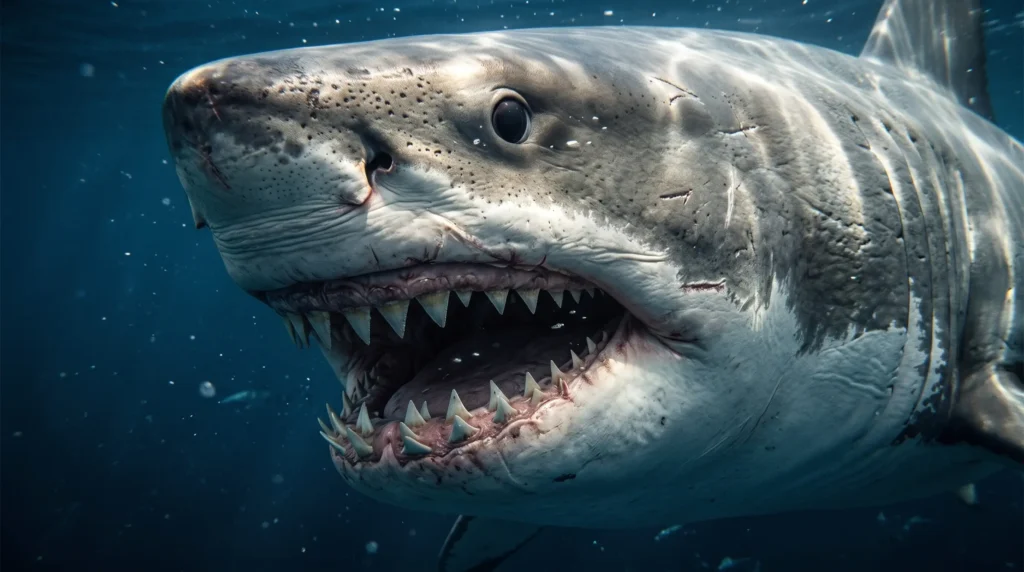
One of the biggest reasons Megalodon attracts so much attention is its incredible size.
Scientists estimate that large individuals may have reached around 15 to 20 meters in length. However, its exact maximum size is still debated because researchers mainly rely on fossil evidence to make these estimates.
Just imagine an animal of that size moving through the ocean. It would have been considerably larger than any living predatory shark today.
Some of its remarkable physical features included:
- A massive, streamlined body built for swimming.
- Huge jaws filled with rows of sharp teeth.
- A powerful tail that helped it move through the water.
- A cartilage-based skeleton, similar to modern sharks.
- A body adapted to life in ancient marine environments.
Its enormous size made Megalodon a truly extraordinary predator.
Where Did Megalodon Live?
Megalodon wasn’t limited to one particular part of the world. Fossils have been discovered across several continents, suggesting that this giant shark had a widespread distribution.
Its remains have been found in areas of North America, South America, Europe, Africa, and Australia.
Megalodon lived in different marine environments, including coastal waters. Scientists also believe that younger Megalodons may have spent time in relatively shallow areas known as nursery habitats.
These locations may have provided younger sharks with suitable conditions for growth and development.
The worldwide distribution of its fossils gives us a better understanding of just how successful this giant shark was in ancient oceans.
What Did Megalodon Eat?
With a body of such enormous size, Megalodon needed plenty of food to survive.
Scientists believe that large marine animals, especially whales and other marine mammals, were important parts of its diet.
Fossilized whale bones with large bite marks provide clues about the feeding behavior of ancient sharks. Some of these marks are consistent with attacks by large predators such as Megalodon.
Its enormous teeth were perfectly suited for gripping and cutting through large prey.
As one of the major predators in prehistoric marine ecosystems, Megalodon played an important role in the ancient ocean food chain.
Why Did Megalodon Become Extinct?
Despite being such a successful predator, Megalodon eventually disappeared from Earth’s oceans around 3.6 million years ago.
Scientists have spent years investigating what happened to this enormous shark. There probably wasn’t just one reason behind its extinction. Instead, several environmental and ecological changes may have played a role.
Changes in Ocean Temperature
Ancient oceans went through significant changes in temperature and environmental conditions.
These changes may have affected the areas where Megalodon lived, making some habitats less suitable for such a large marine predator.
A Decline in Available Food
Megalodon likely depended heavily on large marine animals for food.
Changes in the distribution and availability of marine mammals may have made it harder for this giant shark to find enough suitable prey.
For an animal that needed substantial amounts of food, this could have created serious challenges.
Competition From Other Predators
Megalodon also lived during a period when other marine predators were becoming increasingly important in ocean ecosystems.
Competition for food and changing relationships between predators and prey may have placed additional pressure on its survival.
Researchers continue to study these possibilities. Its extinction was most likely connected to a combination of environmental changes and ecological pressures.
Is Megalodon Still Alive Today?

The idea of a giant shark secretly living in the deepest parts of the ocean sounds fascinating, especially in movies and fictional stories.
However, there is no credible scientific evidence that Megalodon still exists today.
Its extinction is supported by the fossil record, which shows that its remains disappear from geological deposits approximately 3.6 million years ago.
Modern oceans are still home to many mysterious and unusual creatures, but Megalodon is considered an extinct species.
Its survival in today’s oceans belongs to fiction rather than established science.
Megalodon Teeth: Remarkable Fossils From Ancient Oceans
If there is one thing that makes Megalodon instantly recognizable, it is its enormous teeth.
Unlike its cartilage skeleton, its teeth were much more likely to survive for millions of years. This is why fossilized Megalodon teeth are among the most important discoveries for understanding this prehistoric shark.
Some fossil teeth measure more than 15 centimeters in length. That’s an impressive size, especially when compared with the teeth of modern sharks.
Scientists examine these fossils to learn about Megalodon’s size, feeding habits, and evolutionary history.
Today, these ancient teeth are popular among fossil collectors and are displayed in museums around the world.
Each discovery offers another small piece of information about a giant predator that once dominated ancient marine environments.
What Can We Learn From Megalodon’s History?
Megalodon’s story is about more than just an enormous shark. It also helps us understand how life in the oceans has changed over millions of years.
Its rise and eventual extinction show how closely marine animals depend on their surroundings, available food, and relationships with other species.
Studying prehistoric creatures also gives scientists a better understanding of modern marine ecosystems.
Although Megalodon no longer swims through our oceans, its history reminds us that even the most powerful animals can disappear when environmental conditions change.
Frequently Asked Questions
When Did Megalodon Live?
Megalodon lived approximately 23 million to 3.6 million years ago, during the Miocene and Pliocene epochs.
How Big Was Megalodon?
Scientists estimate that large Megalodons may have reached approximately 15 to 20 meters in length, although the exact maximum size remains uncertain.
Was Megalodon Bigger Than a Great White Shark?
Yes. Megalodon was considerably larger than modern great white sharks and was among the largest known predatory sharks in Earth’s history.
What Did Megalodon Eat?
Its diet likely included large marine animals, particularly whales and other marine mammals.
Why Did Megalodon Become Extinct?
Environmental changes, shifts in food availability, and competition with other marine predators may have contributed to its extinction.
Can Megalodon Still Be Found in the Ocean?
No. There is no reliable scientific evidence that Megalodon survives today. It is considered extinct.
Conclusion
Megalodon remains one of the most fascinating animals ever to live in Earth’s oceans. Its enormous size, powerful jaws, and impressive fossil teeth make it a remarkable part of prehistoric marine history.
Although this giant shark disappeared millions of years ago, scientists are still learning new things from the fossils it left behind.
From its role as a major ocean predator to the mystery surrounding its extinction, Megalodon gives us a glimpse into a time when the world’s oceans were home to some truly extraordinary creatures.