Imagine looking into an ancient river and spotting a huge reptile moving quietly beneath the water. With its enormous body, long jaws, and powerful tail, it would have been an incredible sight. This was Sarcosuchus, one of the largest crocodile-like reptiles to ever exist, widely known by its nickname, SuperCroc.
Sarcosuchus lived around 110 million years ago during the Early Cretaceous Period. It inhabited freshwater environments in ancient Africa, where rivers and wetlands provided a home for many prehistoric creatures.
Unlike the crocodiles we see today, this ancient reptile reached an extraordinary size. Its fossils have given scientists a closer look at what life was like in prehistoric rivers and the incredible animals that once lived there.
What Was Sarcosuchus?
Sarcosuchus was an extinct crocodile-like reptile that lived during the Early Cretaceous Period. Its full scientific name was Sarcosuchus imperator, and it belonged to an ancient group of reptiles known as crocodyliforms.
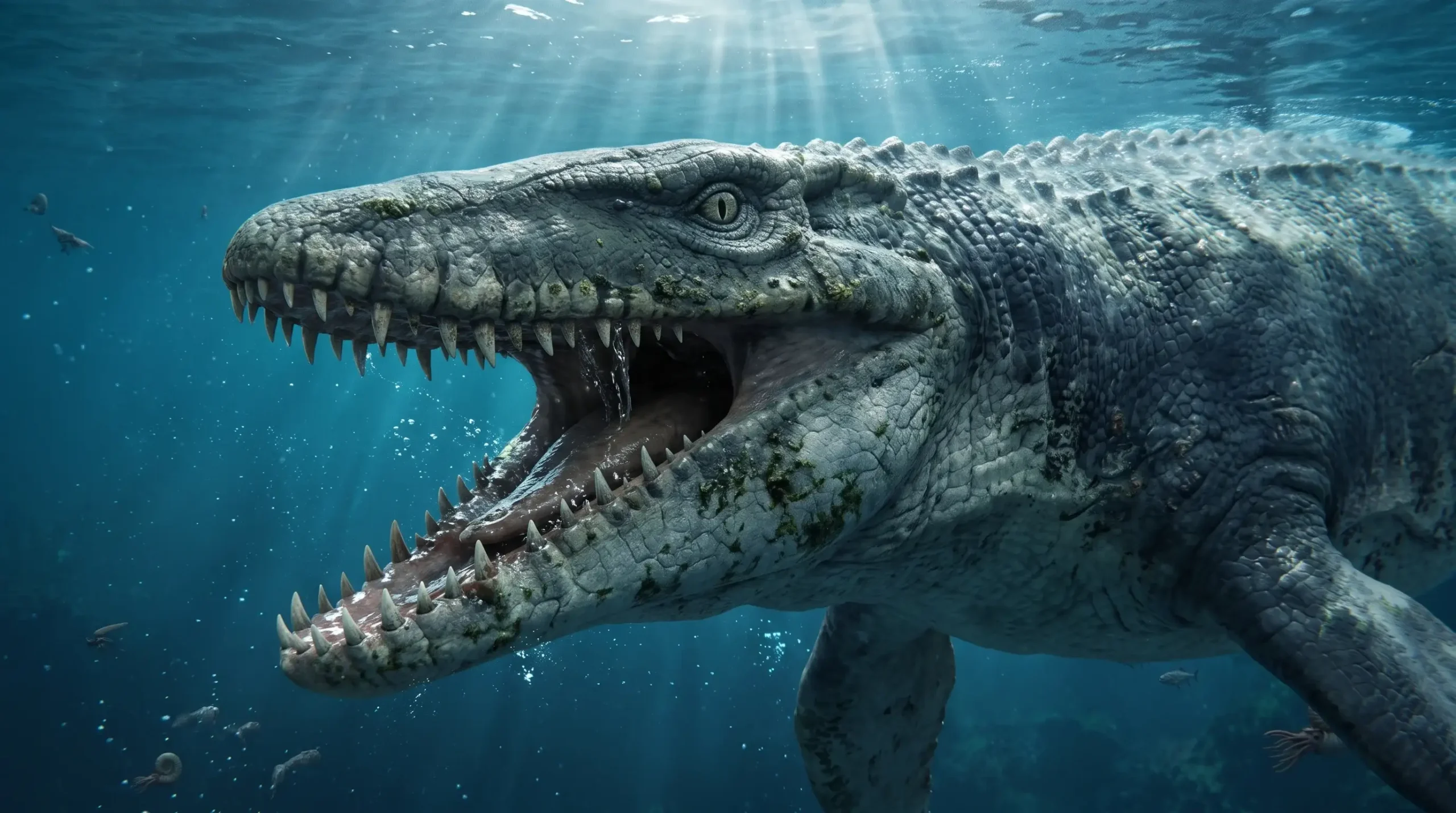
Although it looked similar to a modern crocodile, Sarcosuchus had several features that made it different. Its most noticeable characteristic was its unusually long snout, which contained rows of strong teeth.
It also had a heavily built body, powerful limbs, a muscular tail, and protective bony armor along its back. These features helped it survive in the freshwater environments where it spent much of its life.
How Big Was Sarcosuchus?
One of the most fascinating things about Sarcosuchus was its enormous size. It was far larger than any crocodile living today.
Based on fossil evidence and scientific estimates, fully grown individuals may have reached around 11–12 meters (36–40 feet) in length. Their estimated weight was approximately 8 metric tons.
Its skull was particularly impressive, with some reconstructed specimens measuring around 1.5 meters long. Just imagine an animal with a head that large moving through an ancient river!
Compared with modern crocodiles, Sarcosuchus was truly a prehistoric giant.

Where Did Sarcosuchus Live?
Sarcosuchus lived in ancient freshwater environments during the Early Cretaceous Period. Most of its well-known fossils have been discovered in Africa, especially in present-day Niger. Related fossil remains have also been reported from South America.
Back then, the landscape looked very different from what we see today. Large rivers, wetlands, and areas filled with vegetation created suitable habitats for many unusual prehistoric animals.
Sarcosuchus was closely associated with these water systems. Its body and powerful tail made it well suited to swimming, while nearby riverbanks provided places to move and rest.
These ancient rivers were home to many different animals, making them important ecosystems for prehistoric life.
What Did Sarcosuchus Eat?
Sarcosuchus was a meat-eating reptile with long jaws and strong teeth that helped it catch and hold its prey.
Scientists believe that fish were an important part of its diet. However, it may also have hunted or eaten other animals that came close to the water.
Its possible food sources included:
- Large prehistoric fish
- Other aquatic animals
- Animals visiting riverbanks
- Possibly smaller or medium-sized dinosaurs
Although scientists are still studying its feeding habits, its skull structure and fossil evidence suggest that Sarcosuchus could handle a variety of prey.
Living near freshwater environments gave this giant reptile plenty of opportunities to encounter animals that depended on rivers and wetlands.
Could Sarcosuchus Live on Land and in Water?
Yes! Sarcosuchus was not limited to living underwater. Like modern crocodiles, it had limbs that allowed it to move around on land as well.
However, freshwater environments were an important part of its lifestyle. Its powerful tail helped it move through water, while its legs supported its body when