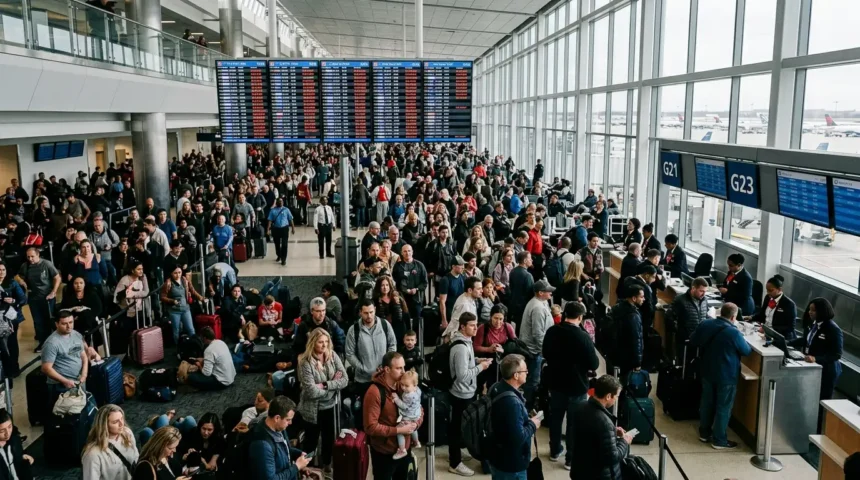
Imagine arriving at the airport, checking your departure gate, and suddenly discovering that your flight is no longer moving. That is what thousands of travelers across the United States experienced on Friday, November 13, 2026, when a rare nationwide flight shutdown disrupted air travel.
Airports across the country faced canceled departures, long waiting lines, and confused passengers trying to find out what was happening. The situation quickly became a major travel story as airlines struggled to manage the disruption.
Although the Federal Aviation Administration (FAA) later lifted its nationwide ground stop, the problems did not disappear immediately. Airlines still needed time to reorganize their schedules, aircraft, and crews.
So, what actually happened, and why did flights across America suddenly stop?
What Happened During the US Flight Shutdown?
On Friday afternoon, the Federal Aviation Administration issued a nationwide ground stop, temporarily preventing departing flights from taking off across the United States.
The decision followed serious communication problems affecting air traffic control centers.
For travelers, the announcement came as a major surprise. People at busy airports found themselves waiting for updates while airlines worked to understand how the disruption would affect their journeys.
The shutdown lasted more than four hours. The FAA eventually lifted the order at approximately 8:15 p.m. Eastern Time, allowing departures to gradually resume.
However, reopening the airspace did not mean every flight could immediately return to its original schedule.
Why Were Flights Grounded Across America?
The main issue involved communication problems within the country’s air traffic control network.
According to officials, aging equipment became overloaded during work involving newer technology connected to the existing system. This created intermittent communication problems and concerns about the reliability of information used by air traffic controllers.
Because aviation depends on reliable communication and accurate information, authorities decided to stop departures as a precaution.
Transportation Secretary Sean Duffy described the situation as a serious problem that highlighted the need to modernize America’s air traffic control infrastructure.
Officials also said there was no evidence that the incident was caused by a cyberattack.
How Many Flights Were Affected?
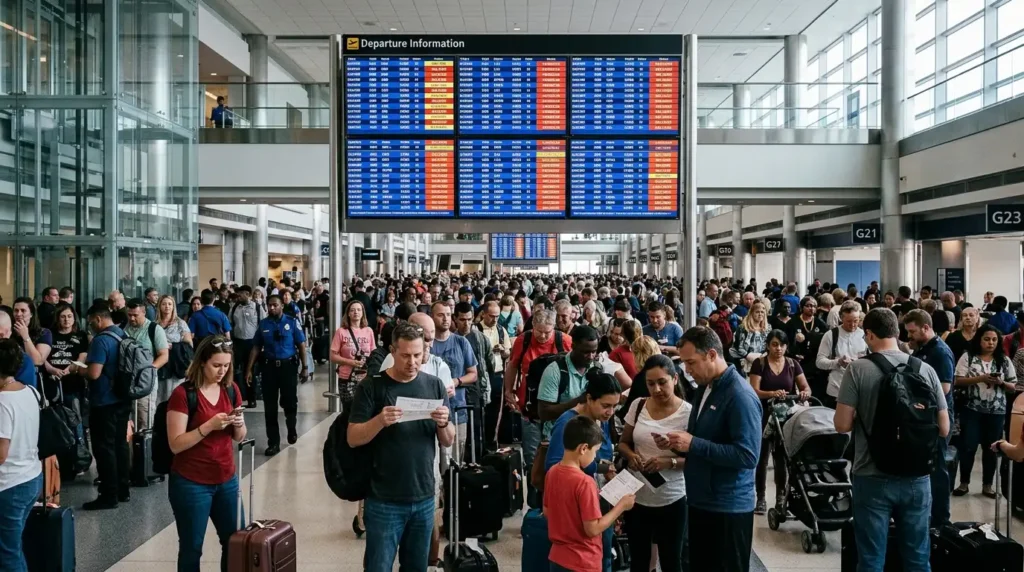
The disruption affected thousands of passengers and airline operations across the country.
According to Associated Press reporting on November 14, FlightAware recorded more than 2,500 flight cancellations in the United States on Saturday, along with hundreds of additional delays.
The effects were not limited to one airport or airline. Major travel hubs experienced problems as airlines attempted to reorganize their operations.
Airports in cities including Chicago, Atlanta, Dallas, New York, Denver, and Los Angeles were among the locations affected by the disruption.
Even after the nationwide ground stop ended, travelers continued experiencing delays as airlines worked to put aircraft and flight crews back into their planned positions.
Which Airlines Were Affected?
Major American airlines experienced operational challenges following the FAA decision.
Delta Air Lines, American Airlines, United Airlines, and Southwest Airlines all reported disruptions to their operations.
Each airline had to deal with its own scheduling problems, including aircraft that were not in their expected locations and crews whose working schedules had been affected.
This created a difficult situation because one canceled flight can affect several other flights later in the day.
Airlines began restoring services gradually, but passengers were warned that delays and cancellations could continue through the weekend.
Were International Flights Also Affected?
Yes. The disruption also created problems for international air travel.
Some flights traveling between the United States and other countries faced delays or changes as aviation authorities responded to the situation.
European aviation authorities temporarily suspended certain departures heading toward the United States at the FAA’s request.
International airlines also had to adjust their schedules and communicate with passengers about changing departure times.
For people traveling overseas, the situation created additional uncertainty, especially for those with connecting flights.
What Should Travelers Do If Their Flight Is Canceled?
Passengers affected by the disruption should check directly with their airline before heading to the airport.
Airlines may offer alternative travel arrangements depending on the circumstances of the cancellation.
According to the US Department of Transportation, passengers whose flights are canceled can generally choose between accepting an alternative flight or receiving a refund if they decide not to travel.
Travelers should also check their airline’s official website or mobile app for the latest flight information.
Relying on old departure times or outdated airport information could lead to unnecessary confusion.
Could This Happen Again?
The incident has raised questions about the technology supporting America’s air traffic control system.
The United States operates one of the world’s busiest aviation networks, handling thousands of flights every day. Keeping that system reliable requires modern equipment, regular maintenance, and dependable communication infrastructure.
Transportation officials have called for additional investment to upgrade outdated technology.
The recent disruption has also renewed discussions about how quickly these improvements should happen.
However, officials have expressed hope that normal operations will be restored before the busy Thanksgiving travel period later in November.
Final Thoughts
The nationwide US flight shutdown was a major reminder of how much modern air travel depends on reliable technology and communication systems.
Although the FAA lifted the ground stop after several hours, the disruption continued affecting travelers as airlines worked through cancellations and scheduling problems.
For now, passengers should stay connected with their airlines and check flight updates before traveling.
As the Thanksgiving holiday approaches, many Americans will be watching closely to see whether the country’s aviation system can return to normal operations without another major disruption.