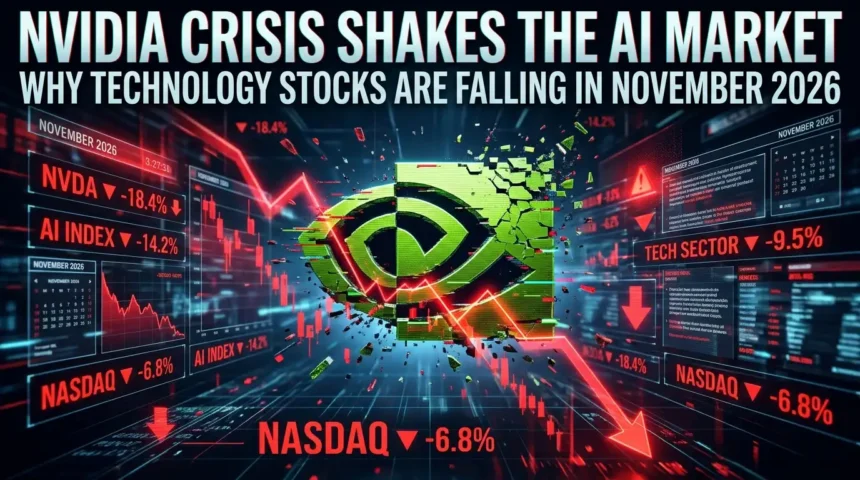
The artificial intelligence industry has experienced extraordinary growth over the past few years, and Nvidia has been at the center of that success. Its powerful computer chips have helped drive the development of AI tools, data centers, and advanced computing systems around the world.
But now, one of the technology industry’s most influential companies is facing an unexpected leadership crisis, and investors are beginning to question what comes next.
Nvidia’s co-founder and CEO Jensen Huang stepped down last week following a controversy that has attracted significant attention. The company is now dealing with questions about its leadership, future strategy, and position in the rapidly growing AI market.
The uncertainty has also affected other technology companies. On November 16, 2026, US stock futures moved lower as investors prepared for Nvidia’s upcoming earnings report and continued to assess the risks surrounding AI investments.
With Nvidia preparing to report its latest quarterly results on November 17, the coming days could be important for the future direction of the technology market.
Why Is Nvidia Facing a Major Crisis in November 2026?
Nvidia’s current problems began with controversy surrounding its CEO, Jensen Huang.
Huang’s departure followed reports about his personal conduct and allegations that raised questions involving national security and the company’s business relationships. These developments created uncertainty around the company’s leadership and attracted attention from investors and government officials.
Nvidia’s chief financial officer, Colette Kress, has taken over as interim CEO while the company searches for a permanent replacement.
For a company as important to the global technology industry as Nvidia, a sudden leadership change is a major development.
Huang played a central role in building Nvidia into one of the world’s most influential semiconductor companies. His leadership helped transform the business from a graphics chip manufacturer into a major supplier of technology powering modern artificial intelligence.
Investors are now looking for reassurance that the company can maintain its direction without him.
Nvidia’s Problems Are Affecting the Entire AI Industry
Nvidia is not an ordinary technology company. Its chips are used by businesses developing AI models, operating large data centers, and building advanced computing infrastructure.
This makes the company an important part of the wider AI economy.
When investors become uncertain about Nvidia, their concerns can spread to other businesses connected to its technology.
Companies involved in semiconductor manufacturing, cloud computing, and AI infrastructure may also experience pressure because their future growth is closely connected to demand for Nvidia’s products.
According to market reports on November 16, technology stocks across several Asian markets also declined as investors reacted to uncertainty surrounding Nvidia.
South Korea’s Kospi fell around 4%, while Taiwan’s Taiex dropped approximately 6% during Monday’s trading session.
These movements show how developments involving a single major technology company can influence markets far beyond the United States.
Why Are AI Stocks Falling?
Nvidia’s leadership controversy is one important reason behind the recent market uncertainty, but it is not the only concern.
Investors are also questioning whether the enormous amount of money being invested in artificial intelligence will generate enough revenue to justify current expectations.
Major technology companies are spending billions of dollars building data centers, purchasing advanced chips, and expanding their AI services.
These investments are designed to support future growth, but investors want to see clear financial returns.
There are several reasons behind the recent pressure on AI-related stocks:
- Leadership uncertainty: Nvidia’s CEO departure has created questions about the company’s future direction.
- High investment costs: Building AI infrastructure requires enormous amounts of money.
- Profitability concerns: Investors want evidence that AI services can generate sustainable returns.
- Market competition: Companies such as AMD and Broadcom are competing in the semiconductor industry.
- Regulatory pressure: Government decisions about AI technology, data centers, and international chip sales could affect future business opportunities.
Together, these issues have made investors more cautious about the AI sector.
Nvidia Earnings Report Could Become a Major Market Test
Another reason investors are watching Nvidia closely is its upcoming quarterly earnings report.
The company is expected to announce its latest financial results on Tuesday, November 17, 2026.
This report will attract attention because investors want to understand whether demand for AI chips remains strong despite the recent leadership crisis.
They will also be looking for information about future revenue, data center demand, and the company’s next generation of AI processors.
A strong financial report could help restore some confidence. However, investors may also pay close attention to management guidance and any information about the company’s long-term strategy.
In other words, good financial results alone may not answer every question surrounding Nvidia.
The company also needs to demonstrate that its leadership transition will not disrupt its business.
Could AMD and Other Chipmakers Benefit From Nvidia’s Problems?
Nvidia’s difficulties have naturally raised questions about its competitors.
Advanced Micro Devices, commonly known as AMD, and Broadcom are among the companies operating in the semiconductor market.
If customers become concerned about Nvidia’s future direction, some may pay closer attention to alternative suppliers.
However, that does not mean competitors will automatically replace Nvidia.
Developing advanced AI chips is a complicated process involving hardware, software, manufacturing capacity, and relationships with major technology companies.
Nvidia has built a substantial position in this market over many years.
Competitors may benefit from changing market conditions, but gaining a larger share of the AI industry will take time.
For now, investors are watching how the leadership situation develops and whether Nvidia can maintain its competitive position.
What Happens Next for Nvidia and the AI Industry?
The next few days could provide important information about the direction of the technology sector.
Nvidia’s earnings announcement on November 17 is one of the biggest events investors are watching this week.
Another development attracting attention is Anthropic’s expected stock market debut later in the week. The company behind the Claude AI assistant has become an important name in the artificial intelligence industry.
Its anticipated market debut could provide another indication of how much investor interest remains in AI businesses.
Meanwhile, Nvidia must address questions about its leadership and demonstrate that its long-term plans remain on track.
The wider AI industry is still developing rapidly, but investors are becoming more selective about which companies they believe can turn technological progress into sustainable profits.
Is This the Beginning of a Bigger AI Market Slowdown?
It is too early to say that the recent decline marks the end of the AI boom.
Artificial intelligence continues to attract investment from technology companies, businesses, and research organizations. Demand for computing power also remains an important part of the industry’s long-term development.
However, the recent market reaction highlights an important difference between technological progress and stock market expectations.
A technology can continue improving even when investors become less confident about the companies building it.
The AI industry may therefore enter a more selective period in which businesses need to demonstrate real demand, sustainable revenue, and stronger financial performance.
For Nvidia, the immediate challenge is rebuilding confidence during a major leadership transition.
Frequently Asked Questions About Nvidia and the AI Market
1. Why is Nvidia making headlines in November 2026?
Nvidia is making headlines because of its leadership crisis following Jensen Huang’s departure as CEO. Investors are also concerned about the company’s future strategy and the impact on the wider AI industry.
2. Who is currently leading Nvidia?
Nvidia CFO Colette Kress is serving as interim CEO while the company’s board searches for a permanent successor.
3. Why are AI stocks falling in November 2026?
AI-related stocks are facing pressure because of Nvidia’s leadership uncertainty, concerns about expensive AI infrastructure investments, market competition, and questions about future profitability.
4. When will Nvidia announce its next earnings report?
Nvidia is expected to announce its latest quarterly financial results on November 17, 2026.
5. Could AMD benefit from Nvidia’s leadership crisis?
AMD could attract more attention from customers and investors, but replacing Nvidia’s position in the AI chip market would be difficult. Competition depends on technology, manufacturing capacity, software, and customer demand.
6. Is the AI boom coming to an end?
There is not enough evidence to conclude that the AI boom is ending. The recent market decline shows that investors are reassessing company valuations and the financial returns expected from AI investments.
7. What should investors watch next?
Important developments include Nvidia’s earnings report, leadership announcements, AI infrastructure spending, and the market performance of other major technology companies.
Final Thoughts
Nvidia’s latest crisis shows how much influence one company can have on the global technology industry.
Its leadership transition has created uncertainty at a time when artificial intelligence is attracting enormous investment and attention. The resulting market pressure has also affected other semiconductor and technology companies.
However, the bigger question is not simply whether Nvidia can recover from its current difficulties. Investors also want to know whether the wider AI industry can turn its enormous investments into long-term business success.
Nvidia’s upcoming earnings report may provide some answers, but the company’s leadership decisions and future strategy will remain important topics in the weeks ahead.