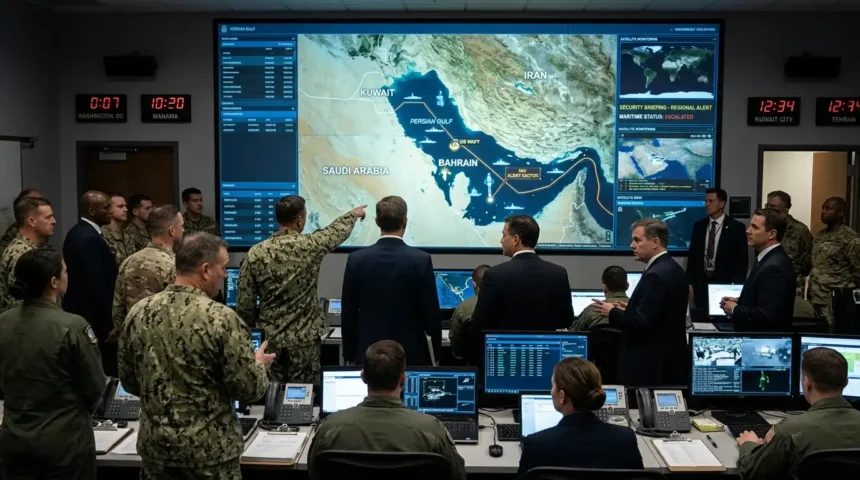
The conflict between Iran and the United States has entered another worrying phase, raising fresh concerns across the Middle East. On November 18, 2026, tensions increased after Iran reported attacks targeting a US military air base in Kuwait, while Bahrain said its air defense systems had intercepted incoming Iranian attacks.
These developments followed US strikes on Iran’s Qeshm Island, located near the strategically important Strait of Hormuz. The latest exchange has increased pressure on Gulf countries and raised questions about whether the conflict could spread further across the region.
What makes the situation particularly serious is that the consequences are no longer limited to Iran and the United States. Countries hosting American military facilities, international shipping companies, oil markets and ordinary people across the Middle East are also facing uncertainty.
What Happened Between Iran and the United States on November 18, 2026?
The latest escalation followed American military strikes on a missile launch site on Qeshm Island on November 17.
According to US officials cited by CBS News, American forces carried out precision strikes against an Iranian Revolutionary Guard missile installation. The US described the operation as a defensive response to attacks against American personnel and military assets.
Iranian officials also reported the strikes but said they had not damaged residential, commercial or major infrastructure facilities on the island.
The situation became more serious overnight when Iran’s military said it had targeted US drone and missile installations at Kuwait’s Ali Al Salem air base.
Kuwait’s military separately reported that its air defense systems were responding to hostile drone attacks.
At almost the same time, Bahrain announced that its air defenses had intercepted incoming aerial attacks. The country accused Iran of following a hostile approach toward its territory.
These incidents show how quickly the conflict can affect multiple Gulf countries.
Why Did the United States Strike Qeshm Island?
Qeshm Island is located in the Strait of Hormuz, one of the world’s most important maritime routes.
The island’s location makes it strategically significant because the surrounding waters are used by international commercial vessels and energy shipments.
According to US military officials, the American operation targeted an Iranian missile launch site associated with the Islamic Revolutionary Guard Corps.
The United States said the action was connected to threats against its personnel and military assets in the region.
Iran, however, has disputed the American justification and described the wider military campaign as an attack on its sovereignty.
The two governments continue to present different explanations for their actions, making independent verification especially important.
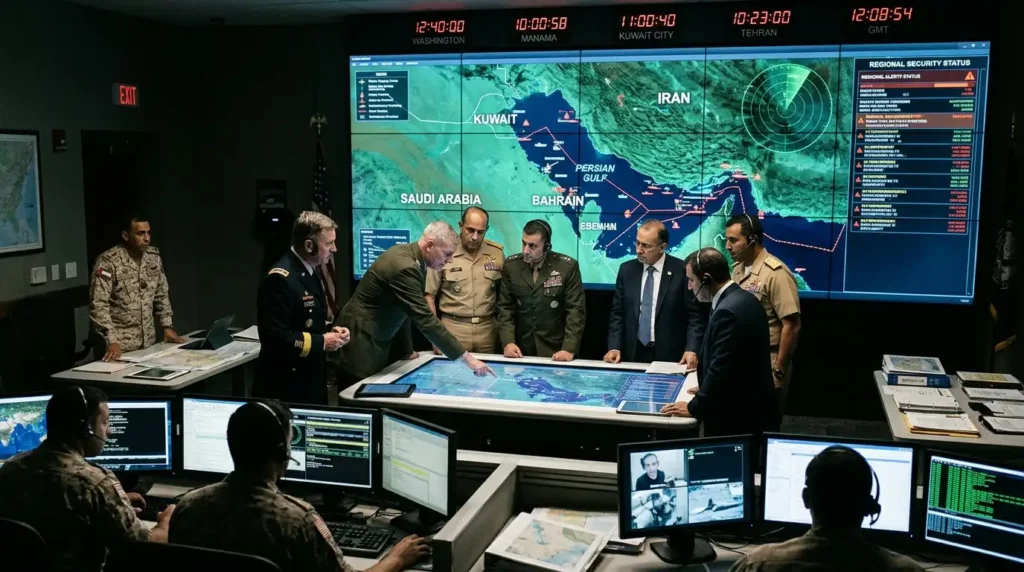
Iran Targets a US Military Base in Kuwait
One of the biggest developments reported on November 18 involved Kuwait.
Iran’s military said it targeted American drone and missile installations at Ali Al Salem air base, a facility used by US forces.
Kuwait’s military confirmed that its air defense systems were dealing with hostile drone attacks. However, its initial statement did not provide a complete account of the damage or identify all the aircraft involved.
The incident is particularly important because Kuwait is a major US partner in the Gulf region.
Any continued attacks involving facilities used by American forces could increase pressure on Washington and create additional security concerns for neighboring countries.
Bahrain Reports Intercepting Iranian Attacks
Bahrain also faced another round of security concerns.
On November 18, the country’s defense authorities said their air defense systems had intercepted incoming Iranian aerial attacks.
Bahrain hosts the headquarters of the US Navy’s Fifth Fleet, making it an important part of American military operations in the region.
The country’s Interior Ministry issued security alerts asking residents to remain calm and move toward safe locations when instructed.
The repeated incidents have raised concerns among Gulf governments about the possibility of further escalation.
However, reports of intercepted attacks should not automatically be interpreted as evidence of widespread damage. Authorities need to establish the full circumstances of each incident.
Could the Conflict Spread to Other Middle Eastern Countries?
This is one of the biggest questions surrounding the latest developments.
Iran, the United States and several Gulf countries have important military, political and economic interests in the region.
Countries such as Kuwait, Bahrain, Saudi Arabia, Qatar and the United Arab Emirates could face additional security pressure if the conflict continues expanding.
Another concern involves Iran-aligned groups operating in the region.
According to Reuters reporting on November 18, a Saudi-led coalition said it had destroyed a missile launched by Houthi forces toward the Riyadh area.
This development demonstrates that the wider regional crisis involves more than one battlefield.
However, it does not mean that every neighboring country will automatically become directly involved in the conflict. Diplomatic negotiations and regional security arrangements could still prevent further escalation.
How the Strait of Hormuz Crisis Could Affect Global Oil Prices
The Strait of Hormuz is one of the most important shipping passages in the world.
A significant share of internationally traded oil and energy products normally passes through this narrow waterway.
When security risks increase, shipping companies may reconsider routes, insurance providers may raise premiums, and energy markets may react to the possibility of supply disruptions.
The ongoing conflict has already created serious pressure on commercial shipping.
Reuters reported on November 18 that attacks and restrictions around the Strait of Hormuz were affecting international trade and contributing to higher energy prices.
The consequences could reach countries far away from the Middle East.
For example:
- Higher oil prices could increase transportation costs.
- Fuel price changes could affect household expenses.
- Businesses could face higher shipping and production costs.
- Countries dependent on imported energy could experience additional economic pressure.
This is why the Strait of Hormuz remains one of the most closely watched locations in the current crisis.
Are Diplomatic Efforts Still Taking Place?
Despite the military escalation, diplomatic efforts have not completely stopped.
Qatar and Oman have been involved in discussions aimed at reducing tensions and finding a possible path toward negotiations.
According to Reuters, Iranian Foreign Minister Abbas Araghchi held discussions in Oman about maritime security and diplomatic options.
Qatari officials also reported discussions with Iranian representatives aimed at narrowing differences between the positions of the parties involved.
These efforts are important because continued military exchanges could create economic and security consequences far beyond the immediate conflict zone.
Pakistan has also been involved in regional diplomatic efforts alongside other countries seeking a peaceful resolution.
Whether these discussions can produce a lasting agreement remains uncertain.
What Does This Crisis Mean for Ordinary People?
International military conflicts are often discussed through political statements, military developments and economic statistics. However, ordinary people can experience some of the most immediate consequences.
Families living in affected areas may face security alerts, travel disruptions and uncertainty about their future.
People outside the region could also feel the effects through changing energy prices and transportation costs.
For countries such as Pakistan, developments in the Gulf deserve particular attention because of economic connections, energy imports and the large number of citizens living and working across the Middle East.
A prolonged crisis could create additional pressure on regional economies.
What Could Happen Next?
The next few days will be important in determining whether tensions increase or diplomatic efforts begin producing results.
Several developments deserve close attention:
- Whether Iran announces further actions against US military facilities.
- Whether the United States carries out additional operations in Iran.
- Whether Bahrain and Kuwait report further security incidents.
- Whether commercial shipping through the Strait of Hormuz becomes more restricted.
- Whether Qatar, Oman and other mediators make progress toward negotiations.
At this stage, predicting the outcome would be premature.
The situation remains fluid, and new official statements or independently verified reports could change the picture quickly.
Frequently Asked Questions (FAQs)
Why are Iran and the United States fighting in November 2026?
The conflict began following US and Israeli attacks on Iran on February 28, 2026. It has since expanded through military exchanges involving Iran, American forces, Israel and regional actors.
Did Iran attack a US military base in Kuwait?
Iran’s military said it targeted US drone and missile installations at Ali Al Salem air base on November 18. Kuwait separately confirmed that its air defenses were responding to hostile drone attacks.
Why did the United States attack Qeshm Island?
US officials said American forces targeted an Iranian Revolutionary Guard missile launch site on Qeshm Island in response to threats against US personnel and military assets.
Did Bahrain intercept Iranian attacks?
Yes. Bahrain’s defense authorities said on November 18 that their air defense systems had intercepted incoming Iranian aerial attacks.
Why is the Strait of Hormuz important?
The Strait of Hormuz is a major international shipping route through which a substantial portion of the world’s traded oil and energy supplies normally passes.
Could the Iran-US conflict affect Pakistan?
Yes. A prolonged regional crisis could affect Pakistan through energy prices, trade, overseas employment and economic connections with Gulf countries.
Is the Iran-US conflict going to become a bigger war?
There is no confirmed way to predict the outcome. Further military exchanges could increase regional instability, but diplomatic negotiations may still help reduce tensions.
Final Thoughts
The latest developments on November 18 show that the Iran-US conflict remains a major challenge for the Middle East.
The reported attacks involving Kuwait and Bahrain, combined with American strikes on Qeshm Island, have increased concerns about regional security and international shipping.
The biggest question now is whether the countries involved will continue exchanging military actions or find a diplomatic way to reduce tensions.
For millions of people across the region, the outcome could affect much more than international politics. It could influence everyday life, economic stability, energy costs and the future of regional security.
This article reflects reporting available on November 18, 2026. Developing events may change the situation.