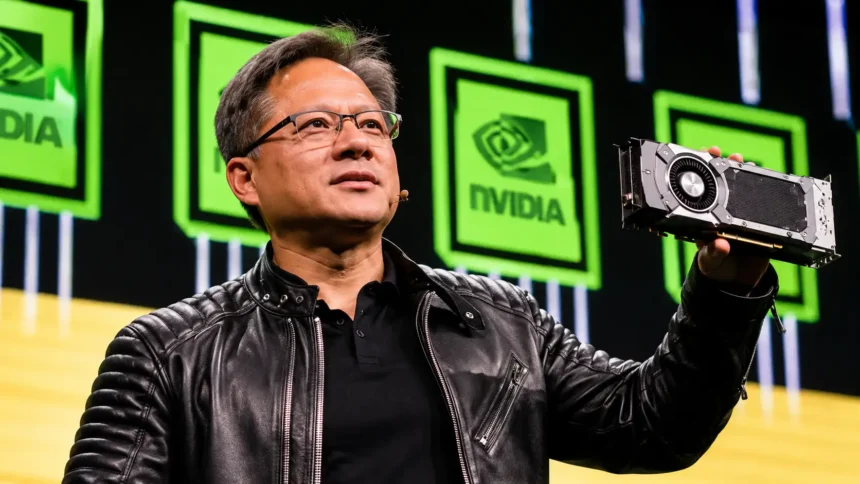
For more than three decades, Jensen Huang has been the face of Nvidia. Under his leadership, the company transformed from a graphics card manufacturer into one of the most influential technology businesses in the world. Its chips now power artificial intelligence systems, massive data centers, advanced computing platforms, and technologies used by companies around the globe.
But Nvidia is now facing a major leadership transition.
On November 11, 2026, Nvidia announced that Jensen Huang had resigned as president and chief executive officer. The company’s board appointed longtime Chief Financial Officer Colette Kress as interim CEO while it searches for a permanent replacement.
The development has created an important question across the technology industry: Who can lead Nvidia after Jensen Huang?
Interestingly, three Israeli technology executives have emerged in media reports discussing possible successors: Michael Kagan, Eyal Waldman, and Johny Srouji.
Each has a different background in semiconductor engineering, artificial intelligence infrastructure, and hardware development. Although none has been officially confirmed as Nvidia’s next CEO, their names have attracted attention because of their experience in the global technology industry.
Let’s look at who these three executives are, why their names are being discussed, and what Nvidia’s leadership change could mean for the future of artificial intelligence.
[FEATURED IMAGE: An original editorial-style image showing Nvidia-inspired technology, an AI data center, and a modern semiconductor chip. ALT: Nvidia CEO succession and the future of artificial intelligence.]
Why Is Nvidia Looking for a New CEO?
Nvidia’s leadership situation changed dramatically in November 2026.
Jensen Huang, who co-founded the company in 1993, stepped down as CEO on November 11. His departure came during a period of intense scrutiny surrounding reports about his personal relationships and allegations involving possible foreign intelligence connections. These allegations have not been established as proven wrongdoing.
The company confirmed the leadership change through an official regulatory filing.
Following Huang’s departure, Nvidia appointed Colette Kress as interim CEO. Kress has served as the company’s chief financial officer since 2013 and has extensive experience managing its financial operations.
However, an interim appointment does not necessarily mean she will become the permanent CEO.
Nvidia’s board is expected to consider potential leaders from both inside and outside the company.
Replacing Huang will not be an ordinary executive appointment. He helped build Nvidia into a global AI powerhouse, and the next CEO will inherit a business operating at the center of the technology industry’s biggest transformation.
1. Michael Kagan: Nvidia’s Technology Expert
[IMAGE 1: Place an original realistic editorial image representing semiconductor engineering and AI hardware development.]
Michael Kagan is one of the most interesting names connected to Nvidia’s possible leadership future.
He currently serves as Nvidia’s chief technology officer (CTO) and has extensive experience in semiconductor technology and high-performance computing.
Before becoming part of Nvidia, Kagan was associated with Mellanox Technologies, an Israeli technology company specializing in high-speed networking equipment.
Nvidia acquired Mellanox in 2020 for approximately $7 billion. The acquisition strengthened Nvidia’s position in data center networking and helped expand its technology beyond traditional graphics processors.
This experience makes Kagan particularly relevant to Nvidia’s future.
Modern AI systems require more than powerful individual chips. They also depend on fast connections between thousands of processors, efficient networking, and advanced data center infrastructure.
Kagan’s technical background connects directly with these important areas.
Why Could Michael Kagan Be Important?
Nvidia’s future depends heavily on its ability to maintain technological leadership.
Kagan understands the company’s hardware and networking technologies, giving him experience in areas that are essential to its AI business.
However, technical expertise and running a global corporation are different responsibilities. Whether he would be interested in becoming CEO, or whether the board would consider him suitable, remains uncertain.
2. Eyal Waldman: The Entrepreneur Behind Mellanox
[IMAGE 2: Place an original editorial image representing an Israeli semiconductor technology company and global data center networking.]
Another Israeli name being discussed is Eyal Waldman.
Waldman is best known as the founder of Mellanox Technologies, the company that eventually became an important part of Nvidia’s business.
He established Mellanox in 1999 and helped develop it into a major player in high-speed networking technology.
The company became especially important as data centers and computing systems needed faster ways to transfer information between machines.
Its technology eventually attracted Nvidia, which completed its acquisition of Mellanox in 2020.
Waldman’s experience is different from that of a traditional corporate executive.
He understands what it takes to build a technology company, develop products, compete internationally, and create long-term business opportunities.
What Makes Eyal Waldman an Interesting Name?
Nvidia is no longer simply selling graphics cards to computer users.
Its business now includes AI infrastructure, networking, advanced computing, and large-scale data center solutions.
Waldman’s experience building Mellanox gives him a strong connection to one of these important parts of Nvidia’s business.
However, there is no public confirmation that he has received a formal offer or that Nvidia’s board has selected him as a candidate.
His name is part of the wider discussion about possible leadership options.
3. Johny Srouji: The Apple Executive With Deep Chip Experience
[IMAGE 3: Place an original editorial image showing advanced processor engineering and next-generation computer chips.]
The third name is Johny Srouji, one of Apple’s most important hardware executives.
Srouji serves as Apple’s senior vice president of Hardware Technologies. He has played a major role in developing the company’s custom processors and hardware technologies.
A graduate of the Technion – Israel Institute of Technology, Srouji built his career around semiconductor engineering.
He became particularly well known for his role in Apple’s transition from Intel processors to its own Apple Silicon chips.
That transition changed Apple’s computing strategy.
By developing its own processors, Apple gained greater control over hardware and software integration, helping improve performance and energy efficiency across products such as Macs and iPads.
Why Could Johny Srouji Be Relevant to Nvidia?
Nvidia and Apple operate in different parts of the technology market, but both depend heavily on advanced chip engineering.
Srouji understands processor development, hardware architecture, and the challenges of delivering complex technology at a global scale.
His experience could be valuable to a company whose future depends on continued innovation in AI processors.
However, there is an important challenge: Srouji already holds a senior position at Apple.
There is currently no public confirmation that he wants to leave Apple or take over Nvidia.
His name is being discussed as a possible outside option rather than a confirmed appointment.
What Do These Three Executives Have in Common?
Michael Kagan, Eyal Waldman, and Johny Srouji have different professional backgrounds, but all three have strong connections to the semiconductor industry.
Their experience highlights three areas that could matter for Nvidia’s next chapter.
Michael Kagan: Deep technical knowledge of Nvidia’s hardware, networking, and computing technologies.
Eyal Waldman: Experience building a technology company and developing global networking solutions.
Johny Srouji: Leadership in advanced processor engineering and custom chip development.
These different strengths could be valuable as Nvidia expands its role in artificial intelligence.
Still, leading a company of Nvidia’s size requires much more than understanding chips. The next CEO will also need to manage employees, investors, major customers, international business relationships, and growing competition.
Who Else Could Replace Jensen Huang?
The discussion is not limited to the three Israeli executives.
Several other technology leaders have appeared in reports about Nvidia’s possible succession options.
One important name is Colette Kress, who is already serving as interim CEO. Her long experience inside Nvidia could make her an option for maintaining stability during the transition.
Other names mentioned in media reports include:
- Ian Buck: A senior Nvidia executive associated with high-performance computing and AI infrastructure.
- René Haas: CEO of Arm Holdings and a former Nvidia executive.
- Lisa Su: CEO of AMD, one of Nvidia’s major competitors.
- Chris Malachowsky: Nvidia co-founder with extensive engineering experience.
These names have different strengths and levels of connection to Nvidia.
For example, choosing an internal executive could help maintain the company’s existing strategy, while an outside leader might bring a different management approach.
At this point, Nvidia has not publicly confirmed a final shortlist of candidates.
Why Replacing Jensen Huang Will Be So Difficult
Jensen Huang’s influence at Nvidia goes far beyond his official CEO title.
He has led the company since its founding and played a major role in shaping its strategy, products, and relationships with major technology businesses.
Under his leadership, Nvidia moved from gaming graphics into professional computing, data centers, and artificial intelligence.
The company’s GPUs became essential tools for training and operating modern AI systems.
This transformation created an enormous business opportunity and helped Nvidia become one of the world’s most valuable technology companies.
The next CEO will face several major challenges:
Maintaining Nvidia’s AI Leadership
Companies around the world are investing heavily in AI infrastructure. Nvidia must continue developing powerful and competitive hardware to maintain its position.
Managing Competition
AMD, custom AI chip developers, and major cloud companies are investing in alternatives to Nvidia’s technology.
Building Investor Confidence
A leadership transition at a major technology company can create uncertainty. Investors will want confidence that the company’s strategy remains strong.
Managing Global Technology Relationships
Nvidia operates in a complicated international environment involving trade restrictions, semiconductor supply chains, and major technology customers.
The next CEO will need to understand all these challenges while keeping the company focused on innovation.
What Does This Leadership Change Mean for the Future of AI?
Nvidia’s leadership transition matters because the company has become a central part of the global artificial intelligence industry.
Its processors are used by technology companies, research organizations, cloud computing providers, and businesses developing advanced AI systems.
A change at the top could influence how Nvidia approaches future products, partnerships, and investment decisions.
However, a new CEO does not automatically mean that Nvidia will completely change its direction.
The company has an established engineering team, experienced executives, long-term customers, and major technology investments.
Its future will depend on how effectively the next leadership team builds on that foundation.
For the broader AI industry, the important question is whether Nvidia can continue delivering the technology needed to support the next generation of artificial intelligence.
Who Is Most Likely to Become Nvidia’s Next CEO?
There is no confirmed answer yet.
Colette Kress has the advantage of already serving as interim CEO and understanding Nvidia’s internal operations.
Michael Kagan offers deep knowledge of Nvidia’s technology.
Eyal Waldman brings entrepreneurial and semiconductor industry experience.
Johny Srouji has an impressive record in processor engineering and hardware leadership at Apple.
Each brings a different combination of skills.
However, the final decision belongs to Nvidia’s board, and public reports about possible candidates should not be treated as official appointments.
The board may ultimately choose someone who has not received much public attention so far.
Final Thoughts
Nvidia is entering an important new chapter after Jensen Huang’s departure.
The company he helped build has become one of the biggest forces in artificial intelligence, and choosing its next CEO will be a major decision for its future.
Michael Kagan, Eyal Waldman, and Johny Srouji are three interesting Israeli technology figures whose names have emerged in succession discussions.
Their experience in networking, semiconductor engineering, and advanced hardware makes them relevant to the conversation.
But the bigger story is not simply who gets the top position.
It is whether Nvidia can maintain its technological leadership and continue shaping the future of AI without the founder who led it for more than three decades.
The next CEO will have an enormous responsibility, and the technology industry will be watching closely.
Frequently Asked Questions (FAQs)
1. Who could replace Jensen Huang as Nvidia CEO?
Possible names discussed in media reports include Michael Kagan, Eyal Waldman, Johny Srouji, Colette Kress, and other technology executives. Nvidia has not confirmed its permanent replacement.
2. Who are the three Israelis linked to Nvidia’s CEO succession discussion?
The three Israeli technology figures are Michael Kagan, Eyal Waldman, and Johny Srouji. Their names have appeared in reports discussing possible successors.
3. Who is Michael Kagan at Nvidia?
Michael Kagan is Nvidia’s chief technology officer. He has a background in semiconductor engineering and was associated with Mellanox Technologies.
4. Who is Eyal Waldman?
Eyal Waldman is the founder and former CEO of Mellanox Technologies, an Israeli networking company acquired by Nvidia in 2020.
5. Who is Johny Srouji at Apple?
Johny Srouji is Apple’s senior vice president of Hardware Technologies. He has played an important role in developing Apple’s custom processors and Apple Silicon.
6. Who is Nvidia’s interim CEO in November 2026?
Nvidia appointed Colette Kress as interim CEO following Jensen Huang’s resignation on November 11, 2026.
7. Why did Jensen Huang leave Nvidia?
Nvidia announced Huang’s resignation on November 11, 2026. His departure came amid scrutiny following reports about his personal relationships and allegations that have not been publicly established as proven wrongdoing.
8. Will Nvidia continue leading the AI industry without Jensen Huang?
Nvidia has an established technology business, experienced engineering teams, and major global customers. Its future leadership will need to maintain innovation and respond to growing competition.
9. Has Nvidia officially selected its next CEO?
No permanent successor has been publicly confirmed. Colette Kress is serving as interim CEO while the board searches for a permanent leader.
10. Why is Nvidia so important to artificial intelligence?
Nvidia develops GPUs, networking products, and computing platforms used to train and operate many modern AI systems. Its technology is widely used in data centers and advanced computing applications.