Winter is supposed to bring cooler weather and a chance to rest after the heat of summer. But for thousands of displaced families in Gaza, the arrival of winter has brought another difficult challenge.
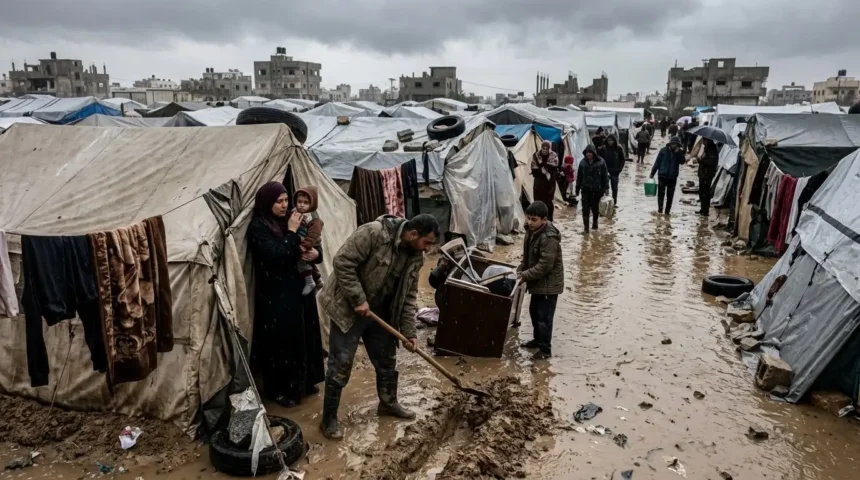
Heavy rainfall, flooding and strong winds have damaged temporary shelters across the Gaza Strip, leaving families struggling to protect their belongings and find safe, dry places to stay. Many people were already living in overcrowded tents after losing their homes during the conflict. Now, the winter weather is making an already difficult humanitarian situation even worse.
The crisis became particularly serious after heavy rainfall began on November 6, 2026. According to humanitarian organizations, the flooding affected displacement camps, damaged shelters and disrupted essential services.
As of November 18, the United Nations and aid organizations are warning that the coming winter months could create even greater challenges for people who lack proper housing, food, clean water and medical assistance.
What Happened in Gaza After the Heavy November Rainfall?
The latest wave of heavy rainfall began on November 6 and continued through the following days.
Large amounts of water entered displacement camps, flooding tents and temporary shelters. Families who had already experienced repeated displacement suddenly found themselves dealing with another emergency.
According to the United Nations Office for the Coordination of Humanitarian Affairs (OCHA), more than 46,000 households, representing approximately 226,000 people, were potentially affected by the heavy rainfall as of November 9.
Humanitarian alerts also indicated that more than 40,000 shelters had been damaged or destroyed, although these initial figures were still subject to verification.
The situation affected several areas across Gaza, including Gaza City, Deir al-Balah, Khan Younis and Rafah.
For families living in temporary accommodation, even a relatively short period of heavy rain can create serious problems. Damaged tents offer little protection against water, cold winds and falling temperatures.
Around 70,000 Tents Reportedly Damaged or Destroyed
One of the most concerning figures came from humanitarian organization CARE.
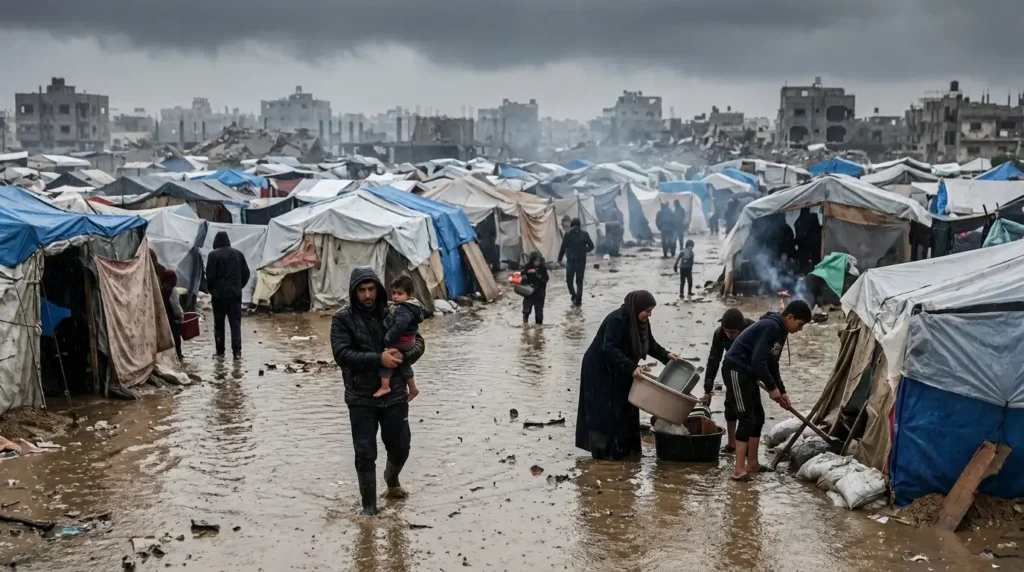
In its November 11 update, CARE reported that an estimated 70,000 tents had been destroyed or damaged during the November winter storm.
These tents were being used by displaced families who had limited alternatives for accommodation.
A damaged tent can mean losing much more than a place to sleep. Families may also lose bedding, clothing, food supplies, important documents and other everyday belongings.
The United Nations has also warned that many people remain without adequate winter shelter.
The challenge is particularly serious because humanitarian organizations were already struggling to provide enough tents, blankets and other essential supplies before the storm arrived.
More Than 1.7 Million People Remain Displaced
The flooding has added pressure to a population already dealing with prolonged displacement.
According to a joint warning from the International Organization for Migration (IOM) and the World Food Programme (WFP) on November 17, more than 1.7 million people remain displaced in Gaza.
Many families are living in temporary shelters, crowded camps or damaged buildings.
For people who have been forced to move repeatedly, finding another place to stay is becoming increasingly difficult.
The shortage of proper housing also means that families have fewer options when heavy rainfall or strong winds arrive.
Humanitarian organizations warn that winter conditions could make the situation particularly dangerous for children, older people and individuals with existing health problems.
Food Shortages Make the Winter Crisis Even Worse
Flooding is not the only problem facing displaced families.
Food insecurity remains a major concern, with humanitarian agencies warning that recent improvements in food availability remain fragile.
On November 17, the World Food Programme warned that critical funding shortages and restrictions affecting humanitarian operations were threatening food assistance in Gaza.
WFP reported that more than 1.4 million people were facing acute hunger.
The agency also explained that its food assistance operations had come under pressure. In some displacement camps, families that previously received one hot meal every day were receiving one meal every two days.
Rainwater has also damaged food supplies stored inside temporary shelters.
This creates another challenge for families who have already lost access to regular cooking facilities and affordable food.
Why Is It So Difficult to Deliver Winter Aid to Gaza?
Humanitarian organizations say that delivering enough winter supplies remains one of the biggest challenges.
The situation involves several problems, including funding shortages, restrictions on humanitarian deliveries, damaged infrastructure and a shortage of equipment.
Aid organizations have requested additional supplies such as:
- Emergency tents and stronger temporary shelters
- Blankets and warm clothing
- Waterproof sheets and shelter repair materials
- Clean water and sanitation equipment
- Medical supplies and essential medicines
- Pumps and machinery to remove floodwater
According to OCHA’s November 9 report, more than 150,000 tents purchased by humanitarian partners and member states were outside Gaza and awaiting delivery at that time.
This highlights an important part of the crisis: obtaining supplies is not enough if those supplies cannot reach the families who need them.
Israeli authorities have maintained that humanitarian supplies continue entering Gaza, while UN agencies and aid organizations have called for faster and more predictable access to essential winter materials.
Floodwater and Sewage Create Additional Health Concerns
Another serious issue is the condition of water and sanitation systems.
Years of conflict have damaged important infrastructure, making it difficult for communities to manage heavy rainfall.
When stormwater mixes with sewage, contaminated water can spread through crowded displacement areas.
According to OCHA’s November 13 humanitarian report, flooding and rising water levels around Sheikh Radwan Lagoon have increased concerns about contamination.
Humanitarian agencies have warned that poor sanitation and contaminated water could increase the risk of waterborne diseases.
Medical services are also facing difficulties.
Flooded roads and damaged facilities can make it harder for patients and medical workers to reach healthcare centres.
Health agencies have raised concerns about respiratory infections, cold-related illnesses and the ability of hospitals to treat children during the winter months.
These problems are particularly serious in areas where medical facilities are already operating with limited resources.
Children and Families Face Growing Winter Risks
Children are among the people most affected by the worsening shelter situation.
Families living in damaged tents have limited protection against cold temperatures and heavy rainfall.
Parents are also struggling to protect children’s clothing, bedding and school materials from water damage.
The impact extends beyond physical shelter.
Flooded learning spaces have disrupted educational activities, leaving thousands of children unable to attend classes in affected locations.
According to OCHA, approximately 109 learning spaces had been affected by rainfall and flooding as of November 10.
This means the crisis is affecting several parts of children’s lives, including education, healthcare, safety and everyday stability.
What Is the United Nations Doing to Help Gaza?
The United Nations and international humanitarian organizations are continuing emergency response operations.
Their efforts include distributing shelter materials, blankets, tarpaulins, winter clothing and food assistance.
Teams have also been working to improve drainage systems, remove standing water and reinforce vulnerable displacement sites.
According to OCHA’s November 13 report, humanitarian partners distributed shelter and essential household supplies to thousands of families during the first part of November.
The World Food Programme is continuing food assistance, while other organizations are working to support healthcare, sanitation and emergency shelter needs.
However, aid agencies say their ability to respond remains limited by funding shortages and difficulties bringing essential supplies into Gaza.
Could More Rain Make Gaza’s Humanitarian Crisis Worse?
Yes. Further heavy rainfall could create additional problems, particularly in areas where drainage systems and temporary shelters are already damaged.
Several risks remain:
- More tents and temporary shelters could be damaged.
- Floodwater could spread through overcrowded displacement camps.
- Contaminated water could increase public health concerns.
- Families could lose additional food and essential belongings.
- Damaged roads could make humanitarian deliveries more difficult.
- Cold weather could increase health risks for people without adequate shelter.
Humanitarian organizations are asking for faster delivery of winter supplies and additional funding before further storms arrive.
The coming weeks will be particularly important as temperatures continue to fall.
What Happens Next in Gaza?
The immediate priority is to help displaced families find safer and more reliable shelter before the winter season becomes more difficult.
Humanitarian organizations are calling for improved access to supplies, additional funding and stronger emergency infrastructure.
International attention will also remain important because the situation involves more than temporary flooding. It is connected to long-term displacement, damaged housing, food insecurity and the difficulty of rebuilding essential services.
Whether the humanitarian response can meet the growing needs of Gaza’s population will depend on access, funding and cooperation between the organizations involved.
Frequently Asked Questions (FAQs)
Why is Gaza facing a winter crisis in November 2026?
Gaza is facing a winter humanitarian crisis because heavy rainfall has flooded displacement camps, damaged tents and disrupted essential services. Many families were already living without proper housing before the winter storms arrived.
How many tents were damaged in Gaza during the November 2026 floods?
CARE estimated on November 11 that approximately 70,000 tents had been destroyed or damaged during the November winter storm. OCHA also reported extensive shelter damage, with initial figures still requiring verification.
How many people are displaced in Gaza?
According to the IOM and WFP joint warning published on November 17, more than 1.7 million people remain displaced in Gaza.
Why are winter conditions dangerous for displaced families?
Families living in temporary shelters often lack proper insulation, warm clothing, blankets and reliable protection against rain. Flooding can also damage food supplies and increase health risks.
Is humanitarian aid reaching Gaza?
Humanitarian organizations continue delivering food, shelter materials and other assistance. However, the UN and aid agencies say funding shortages and restrictions on access are limiting their ability to meet the full demand.
How is flooding affecting children in Gaza?
Flooding has damaged temporary shelters and learning spaces. Children also face increased difficulties accessing education, healthcare, safe drinking water and adequate winter clothing.
What does Gaza need most before winter?
The most urgent needs include proper shelters, tents, blankets, warm clothing, food, clean water, sanitation equipment and medical supplies.
Final Thoughts
Gaza’s latest winter crisis shows how difficult life has become for families who have already experienced prolonged displacement.
The November rainfall has damaged temporary shelters, disrupted food supplies and increased pressure on healthcare and sanitation services.
For many families, the challenge is no longer simply finding a place to stay. It is finding somewhere that can protect them from the weather and provide the basic conditions needed for everyday life.
Humanitarian organizations are warning that more support is urgently needed before additional winter storms arrive.
The coming weeks will show whether international assistance can reach vulnerable families quickly enough to prevent the situation from becoming even more difficult.
Latest update: November 18, 2026. Figures and humanitarian assessments are based on reports available on their respective publication dates.