Tensions between the United States and Cuba are rising again, and recent comments from President Donald Trump have attracted international attention. The possibility of military action against the Caribbean island has raised questions about the future of relations between the two countries.
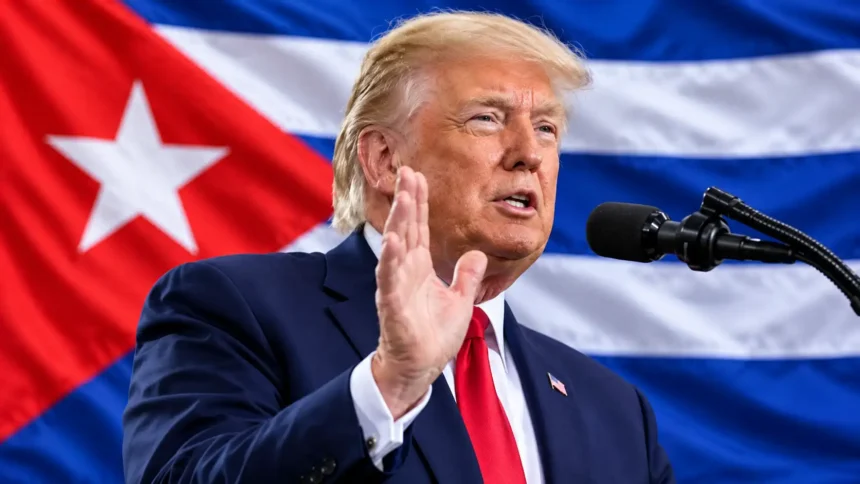
On November 13, 2026, Trump said he would “certainly consider” using military force against Cuba when asked about the possibility during an interview with conservative radio host Hugh Hewitt.
His comments have created fresh concerns about what could happen next. However, there is an important distinction: Trump has discussed the possibility of military action, but no final decision to launch an operation has been publicly announced.
So why is Cuba back at the center of American foreign policy, and what does Trump’s statement actually mean?
Let’s look at the background, the latest developments, and what could happen next.
What Did Donald Trump Say About Military Action Against Cuba?
President Donald Trump made his comments during a November 12 interview with Hugh Hewitt, which was reported by international news organizations the following day.
When asked whether he would consider using military force against Cuba, Trump responded that he would certainly consider it.
He also said he wanted to “get Cuba done” before leaving office.
Trump described Cuba as a struggling nation and suggested that Secretary of State Marco Rubio could play an important role in the administration’s approach.
Rubio’s family background is also connected to Cuba, as his parents were born there.
These remarks immediately attracted attention because they appeared to put military intervention more openly into the discussion of US policy toward the island.
However, Trump’s comments should not be confused with an official announcement of military action. The administration has not publicly confirmed a decision to launch an attack.
Why Are Relations Between the United States and Cuba So Tense?
The relationship between Washington and Havana has been difficult for decades.
The United States and Cuba have experienced political disagreements, economic restrictions, diplomatic tensions, and periods of limited cooperation since the Cuban Revolution in 1959.
One of the biggest issues has been the American trade embargo against Cuba, which has restricted economic relations between the two countries for generations.
Over the years, different US administrations have taken different approaches toward the Cuban government.
Some supported stronger economic pressure, while others attempted to improve diplomatic relations.
During Trump’s second administration, pressure on Cuba increased again.
The administration introduced additional restrictions and supported policies aimed at putting pressure on the Cuban government.
These developments have contributed to the latest diplomatic tensions.
Cuba Is Facing a Serious Economic and Energy Crisis
Another important part of this story is Cuba’s difficult economic situation.
The country has been struggling with electricity shortages, limited fuel supplies, food shortages, and pressure on its healthcare system.
Power outages have affected daily life across the island, creating problems for households, businesses, hospitals, and public services.
US restrictions on fuel supplies have added to these difficulties, although Cuba’s economic problems also have several domestic and international causes.
The Cuban government has criticized American policies, arguing that economic pressure makes an already difficult situation worse.
The United States, meanwhile, has defended its pressure campaign as a way to push for political changes.
For ordinary Cuban families, the biggest concern is often much simpler: access to electricity, food, medicine, and basic services.
Why Is Marco Rubio Important in the Cuba Situation?
Secretary of State Marco Rubio is one of the most important figures in the Trump administration’s Cuba policy.
Rubio has a long history of supporting a tougher American approach toward the Cuban government.
His family background also makes the issue personally connected to his political history. His parents emigrated from Cuba before he was born.
During his November remarks, Trump praised Rubio and suggested that he would be interested in dealing with the situation.
Rubio’s position matters because the State Department plays an important role in American diplomacy and international relations.
However, the president’s comments do not automatically mean that Rubio or the administration has approved a military operation.
Has the United States Already Prepared for Military Action?
Reports about military planning have added another layer to the story.
In September 2026, Anadolu Agency and CBS News reported that the US Army Reserve was assessing whether it could provide certain support units to US Southern Command within approximately 90 to 120 days.
The reported assessment involved medical, military police, engineering, and other support capabilities.
However, officials emphasized that this assessment did not amount to deployment orders.
It also did not confirm that President Trump had made a final decision about military action.
This distinction is important because governments regularly review military readiness for different possible situations. A readiness assessment alone does not prove that an operation is about to happen.
For now, the public information does not establish that an invasion of Cuba has been approved.
How Could This Situation Affect Ordinary People?
Whenever tensions increase between two countries, people living in the affected region can face uncertainty.
For Cuban residents, further political and economic pressure could make existing difficulties more challenging.
Possible consequences of a prolonged crisis include:
- Greater uncertainty for local businesses and families.
- Additional pressure on fuel and electricity supplies.
- More difficulties with international trade.
- Increased diplomatic tensions across the Caribbean.
- Greater uncertainty for Cuban families living abroad.
A military conflict, if one ever occurred, could create much wider humanitarian and regional consequences.
That is one reason why diplomatic communication and peaceful solutions remain important.
What Has Cuba Said About the US Threats?
Cuban officials have repeatedly rejected American pressure and defended the country’s sovereignty.
President Miguel Díaz-Canel has criticized US policies and said Cuba would resist foreign aggression.
The Cuban government has also described American economic restrictions as a form of collective punishment.
Washington and Havana have disagreed for decades over political freedoms, economic policy, and the future of Cuba’s government.
Despite these disagreements, diplomatic discussions have taken place at different points.
The current challenge is whether both countries can find a way to reduce tensions without creating a larger international crisis.
Could the United States Actually Take Military Action Against Cuba?
At this stage, nobody can say with certainty what the Trump administration will do.
The president has openly said he would consider military action, but his statement is not the same as an official military decision.
Several factors could influence what happens next, including diplomatic negotiations, political developments, international reactions, and decisions made by the US government.
Any major military action would also raise serious legal, political, and humanitarian questions.
Cuba’s geographical position in the Caribbean makes the situation important beyond the two countries themselves.
Other governments in the region would likely pay close attention to any further escalation.
For now, the most responsible conclusion is that tensions are increasing, but a military operation has not been publicly confirmed.
What Happens Next Between Trump and Cuba?
The coming weeks could provide a clearer picture of the administration’s intentions.
International observers will be watching for official statements from the White House, comments from Marco Rubio, and any developments in diplomatic discussions.
Economic restrictions and Cuba’s continuing energy problems will also remain important parts of the story.
Whether the situation moves toward negotiations or further confrontation remains uncertain.
One thing is clear: Trump’s latest comments have brought US-Cuba relations back into the international spotlight.
The future of the relationship will depend on decisions made by both governments and whether they can prevent the current political disagreement from becoming a much larger crisis.
Final Thoughts
Donald Trump’s comments about potentially using military force against Cuba have created another important moment in the long history of US-Cuba relations.
The situation is serious, but it is important not to confuse political statements with confirmed military decisions.
Cuba is already dealing with major economic and energy challenges, while Washington continues to apply pressure on its government.
For millions of people connected to the region, the biggest hope is that the situation can be resolved through diplomacy rather than conflict.
The world will be watching what happens next.
Frequently Asked Questions (FAQs)
1. Is Donald Trump planning military action against Cuba?
Donald Trump said on November 13, 2026, that he would certainly consider military force against Cuba. However, no final decision to launch an operation has been publicly announced.
2. Why does Donald Trump want to put pressure on Cuba?
The Trump administration has criticized Cuba’s government and wants political changes on the island. Economic restrictions and diplomatic pressure are part of its approach.
3. Who is Marco Rubio, and why is he involved?
Marco Rubio is the US Secretary of State. He is an important figure in American foreign policy toward Cuba and has Cuban family roots.
4. Is the United States preparing to invade Cuba?
There have been reports of military readiness assessments, but these do not confirm an invasion order or a final decision to use military force.
5. Why is Cuba experiencing electricity shortages?
Cuba’s electricity problems are connected to aging infrastructure, fuel shortages, economic difficulties, and restrictions affecting energy supplies.
6. When did Trump make his latest comments about Cuba?
Trump made the comments during an interview on November 12, 2026. The remarks were widely reported on November 13.
7. Could tensions between the US and Cuba affect the Caribbean?
Yes. A serious diplomatic or military crisis could affect regional stability, trade, migration, and international relations throughout the Caribbean.
8. What happens next between the United States and Cuba?
The next developments will depend on decisions by both governments, diplomatic discussions, and the direction of US policy. A military operation has not been publicly confirmed.